
An open field journal with handwritten notes and archaeological sketches

Field Journal

Discoveries from the Field

An ongoing record of the research, reflections, and revelations behind Vessels of Scripture.

What if you could hold the world of the Bible not only in your heart, but in your hands?

For generations, believers have encountered God through His Word. The Vessels of Scripture project invites you to experience the world of the Bible in a deeper and more tangible way. Beginning with Scripture, each journey explores the history, archaeology, and hands-on discoveries that illuminate the lives of the people who first heard and lived God's Word.

Every Field Journal entry begins with Scripture. We invite you to read the featured passages first, then continue through the historical setting, archaeological discoveries, and hands-on exploration that bring the world of the Bible into sharper focus. Our desire is not to add to God's Word, but to deepen appreciation for it by engaging the heart, the mind, and the hands.

Entry 0

The Question That Started It All

Every meaningful journey begins with a question.

This one began with a simple question.

How many different vessels are mentioned in the Bible?

Searching for the answer opened the door to countless others.

  • Why was this vessel mentioned?

  • Who used it?

  • What purpose did it serve?

  • Was its physical form part of the message God intended to communicate?

Those questions led first back to Scripture, then into biblical history, archaeology, and the remarkable discoveries that continue to illuminate the world of the Bible. But another question soon emerged.

What could be learned by recreating these vessels and holding them in our own hands?

As ancient forms were recreated from clay, details that are easy to overlook on the printed page began to emerge. Size. Weight. Balance. Craftsmanship. Function. Objects that once seemed ordinary became tangible reminders that God chose to reveal His extraordinary story through the everyday lives of ordinary people.

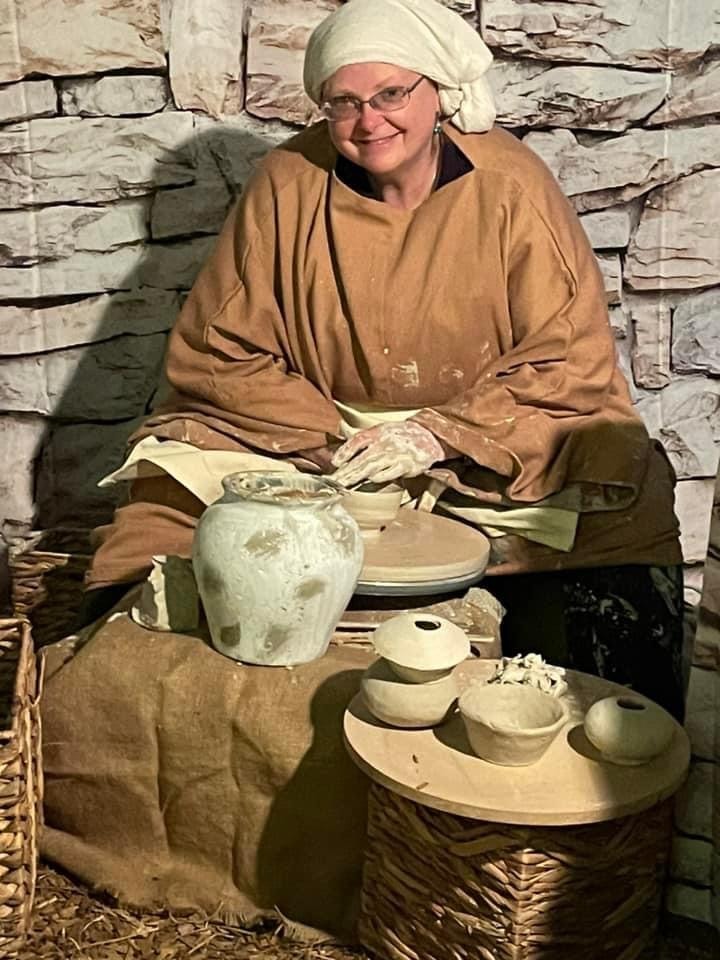
The first vessel explored was the humble oil lamp. Its repeated appearance throughout Scripture, together with an opportunity to portray a potter during a church Walk Through Bethlehem, made it the natural place to begin. That single project became the first step in an ongoing journey of discovery.

This Field Journal is an invitation to take that journey together.

Every entry begins with God's Word. From there we explore the historical setting, archaeological discoveries, and hands-on discoveries that illuminate the world behind the biblical text. Our prayer is that every journey returns us to Scripture with greater understanding, deeper appreciation, and fresh eyes.

Entry 01

The Lamp That Would Not Go Out

The Lamp That Would Not Go Out

Begin in Scripture

Matthew 25:1–13 · Exodus 27:20 · Psalm 119:105

Open your Bible and read these passages before continuing. Scripture is the foundation — everything that follows exists to illuminate it.

The Question

Why did Jesus choose a lamp to illustrate readiness? What did this everyday object communicate to those who first heard the parable?

Historical Context

The clay oil lamp is one of the most enduring objects in the archaeological record of the ancient Near East. Found in virtually every excavation layer from the Chalcolithic period onward, the lamp was not a luxury — it was a necessity. Its simple form, a pinched or folded disc of clay with a wick channel, changed remarkably little over thousands of years.

Archaeological Discoveries

Excavations at sites across Israel and Jordan have uncovered thousands of intact lamps, many still bearing traces of olive oil and carbonized wick fibers. At Megiddo, lamps were found in domestic contexts alongside grinding stones and storage jars, painting a vivid picture of ordinary household life. At Qumran, lamps were discovered in the scriptorium itself — the room where the Dead Sea Scrolls were copied.

Entry 02

The Woman at the Well

The Woman at the Well

Begin in Scripture

John 4:1–30 · Genesis 24:11–20 · Ruth 2:9

Open your Bible and read these passages before continuing. Scripture is the foundation — everything that follows exists to illuminate it.

The Question

Why does John mention the water jar she left behind? What does this small detail reveal about what happened at the well?

Historical Context

Water jars — large, heavy, utilitarian — were among the most important objects in the ancient household. Carried on the head or hip, they were the daily work of women and girls across the ancient world. The well was not merely a water source; it was a social gathering place, a site of encounter, and in the biblical narrative, a place where destinies were changed.

Archaeological Discoveries

Large storage jars from the Iron Age, known as pithoi, have been found in abundance at sites throughout the Levant. Their standardized forms suggest they were produced by specialist potters and traded widely. Smaller water jars, more personal in scale, show greater variation — evidence of household production and individual craft.

Entry 03

The Potter and the Clay

The Potter and the Clay

Begin in Scripture

Jeremiah 18:1–10 · Isaiah 64:8 · Romans 9:21

Open your Bible and read these passages before continuing. Scripture is the foundation — everything that follows exists to illuminate it.

The Question

Why did God send Jeremiah to the potter's house rather than simply telling him the message? What was Jeremiah meant to see — and feel — there?

Historical Context

The potter's workshop was a familiar sight in the ancient world. Archaeological evidence from sites across Israel reveals dedicated pottery production areas — clay storage pits, levigation basins for purifying clay, potter's wheels, and kilns. The craft was passed from generation to generation, and the potter's skill was widely respected.

Archaeological Discoveries

At Lachish, excavators uncovered a pottery workshop dating to the Iron Age II period, complete with a potter's wheel pivot stone still in place. The workshop produced a standardized range of vessels — storage jars, cooking pots, lamps, and juglets — suggesting a level of specialization and perhaps even proto-industrial production.

Ready to Experience These Discoveries with Your Own Hands?

Join us for the Vessels of Scripture experience and step into the world of the Bible through creativity, history, and discovery.